January 14, 2026
By Sam Weiger
The 2025 UFA season was arguably the most electric in league history, leaving a trail of high-stakes questions in its wake. We witnessed a handful of things: a true changing of the guard, the Central, South, and West divisions gaining ground on the East’s long-standing dominance, and global superstars leaving an unprecedented mark on the league. We head into 2026 wondering: after such a seismic shift, what’s next?
1. Are Tobe Decreane and Jeff Babbitt leading Boston into a dynasty?
With reigning UFA MVP Tobe Decraene officially confirmed for the 2026 season, Boston enters the year as the undisputed team to beat. Between Decraene’s historic production and a core of ascending young stars, Boston looks less like a 'one-hit wonder' and more like the next New York Empire. They have the youth, talent, and leadership to sustain a multi-year title run—the only noteworthy obstacles are player health and whether any challenger in the league is equipped to stop them.
If there is one crack in the Glory’s armor I’m focused on, it lies in a variable that is impossible to predict: Jeff Babbitt’s health. While his raw statistics in 2025 might not have matched his video game numbers of the past, his impact on winning was undeniable. Whether it was the game-sealing block against Minnesota in the final or his clutch catches against Salt Lake the evening before, Babbitt remains one of the top game changers in the UFA.
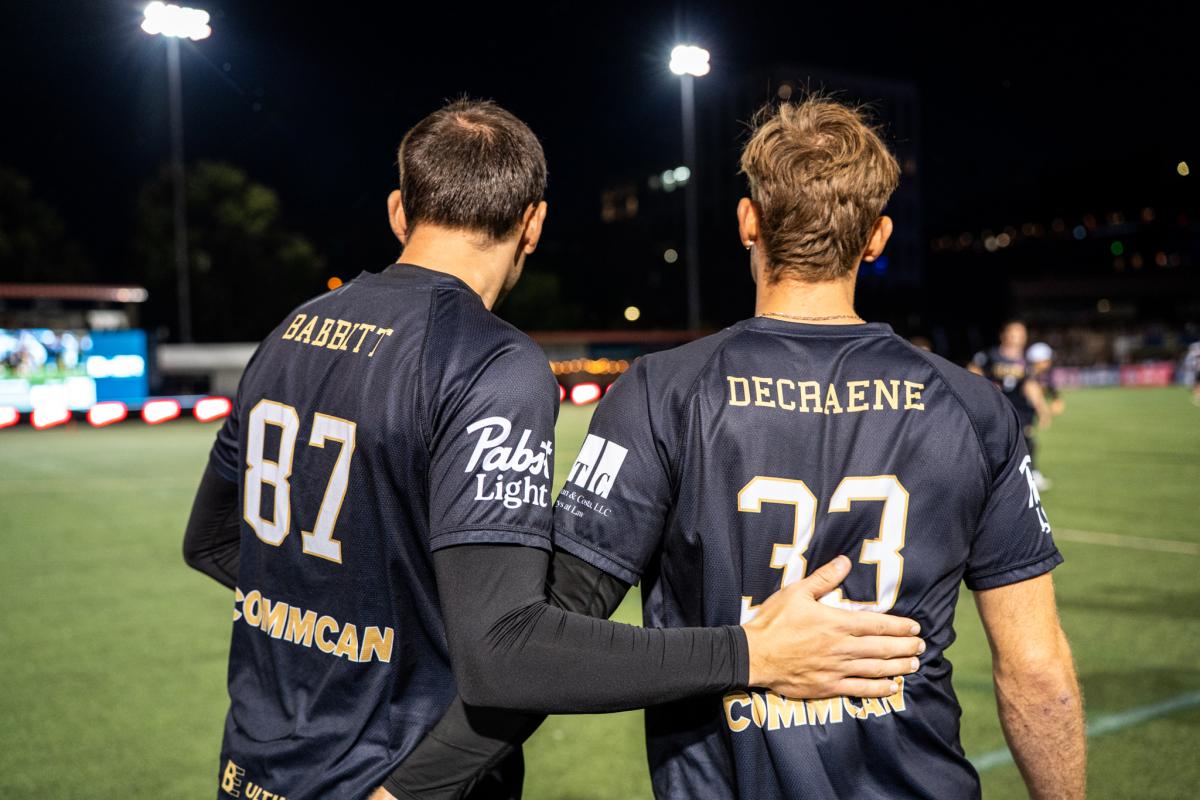
Boston’s vulnerability without Babbitt is undeniable. In his three-game absence last year, the Glory lost two critical games, suffering their worst completion percentages and allowing at least 20 goals in both games. To survive a playoff run or long stretch without him, they must shore up their disc security and make up for his defensive prowess.
Babbitt, who turns 32 prior to the start of the 2026 season, played through injury for almost the entire 2025 season. So his health will be something to monitor this year, especially closer to the start of the playoffs, because of his physical style of play week in and week out.
But there’s more at stake than just Boston’s title defense. Babbitt is now knocking on the door of 'GOAT' status. With four UFA titles, two MVPs, and seven All-UFA selections, he is surely in the conversation—but he still has work to do to lead it. Currently, he sits just one ring behind Beau Kittredge, the man many consider the greatest to ever play in the UFA.
A fifth championship would boost Babbitt’s GOAT status the most, but a third MVP would also separate him from the other all-time greats; it would make Babbitt the only player in UFA history to win the award three times.
Beyond the hardware, Babbitt is quietly rewriting the record books in two major statistical categories. Entering 2026, Babbitt needs just 12 blocks to become the league's all-time defensive king. On the offensive side, while Cameron Brock and Ben Jagt’s goal totals remain out of reach, Babbitt is on the verge of moving into the number three spot. He’s only 29 goals away from passing Matt Smith’s 375.
2. Will the Central Division assert itself as a major player once again in 2026?
The narrative surrounding the Central Division has undergone a total transformation. After being overlooked in 2023 and most of 2024, the division has now sent a team to the UFA Championship Game in consecutive seasons. The 2025 campaign punctuated this rise, as the Central not only produced a championship contender in Minnesota but also saw a Chicago team become the first team to finish in the top four of the final regular season power rankings since 2021.
No matter what happens with Chicago this year, one thing is clear. Minnesota has retained their top players and added the explosive Nathan de Morgan—who was a rising star for Salt Lake last season—so it appears that the Wind Chill plan to be back in the finals for a third year running.

While Minnesota’s rise over the last few seasons is best seen on film, their 'intangibles' are increasingly backed by elite defensive metrics. Head Coach Ben Feldman has forged a roster of high-pressure warriors who thrive where other teams blink. This isn't just a narrative; it’s reflected in their status as a top-three unit for break percentage and blocks over the past three seasons.
In the playoffs, this aggressive identity reaches another level. Whether it’s Paul Krenik racking up a massive five blocks in the 2025 semifinal comeback against Atlanta, the unreal Noah Hanson layout block against Chicago, or Will Brandt’s video game numbers at 2024 Championship Weekend, the Wind Chill have mastered the art of the season-saving play.
And then you have the Indianapolis AlleyCats, who enter 2026 with a top-tier UFA defense on paper after adding four of the league’s top-25 blockers from last season—Nate Little, James Pollard, William Wettengel, and Xavier Payne.
But will that be enough? The ‘Cats also need to transform an offense that ranked bottom-three in hold rate (49.33 percent) and turnovers per game (26.58) last year. While adding Cam Brock and high-volume thrower Jake Felton provides valuable playmaking, the O-line remains a major question mark.
3. Which title-less franchise is best positioned to finally hoist the trophy?
In 2025, Boston Glory became just the eighth active franchise to hoist the trophy. This leaves nearly two-thirds of the league still hunting for their first championship, including some heavyweights: Salt Lake, Atlanta, Chicago, and DC.
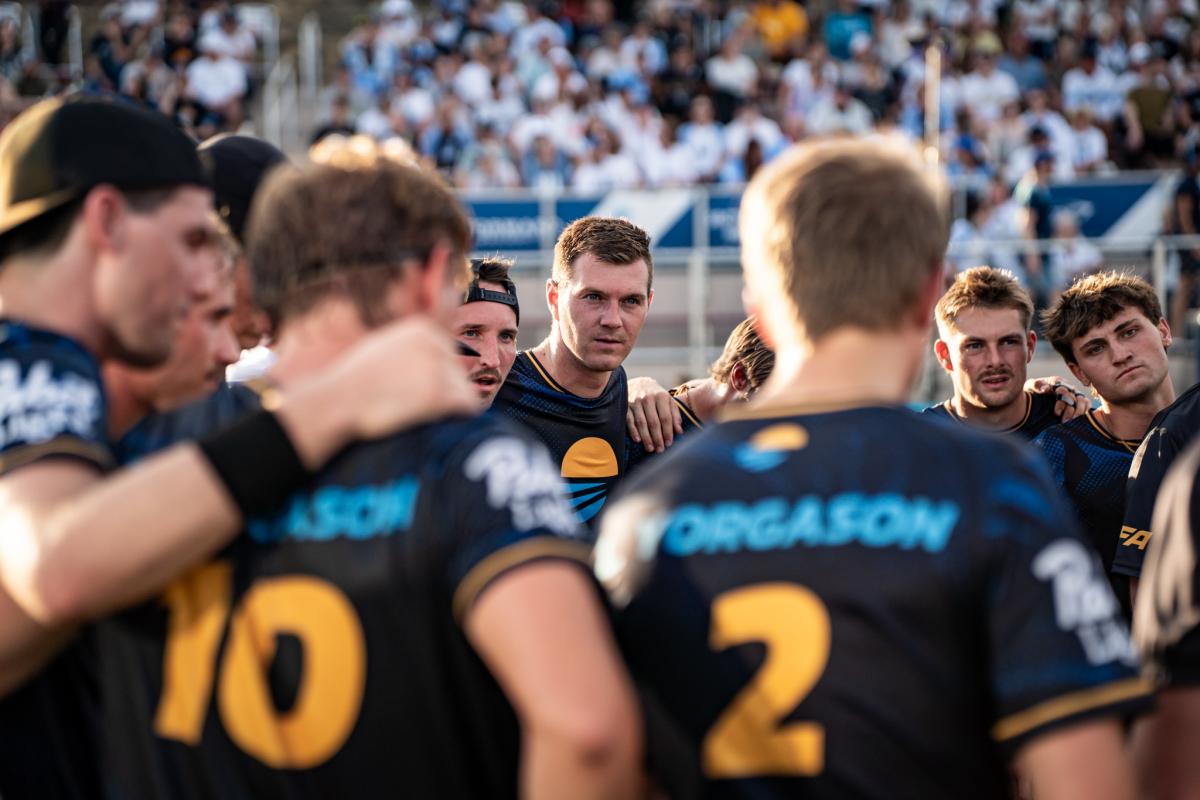
The Shred, in particular, proved last season that their elite status is no fluke. Despite a roster overhaul from 2023, they returned to Championship Weekend on the back of a rapidly maturing young core. With players like Chad Yorgason, Will Selfridge, McKay Yorgason, and Most Improved Player Matt Russnogle taking massive strides last year, it’s clear that Salt Lake hasn't even hit their ceiling yet.
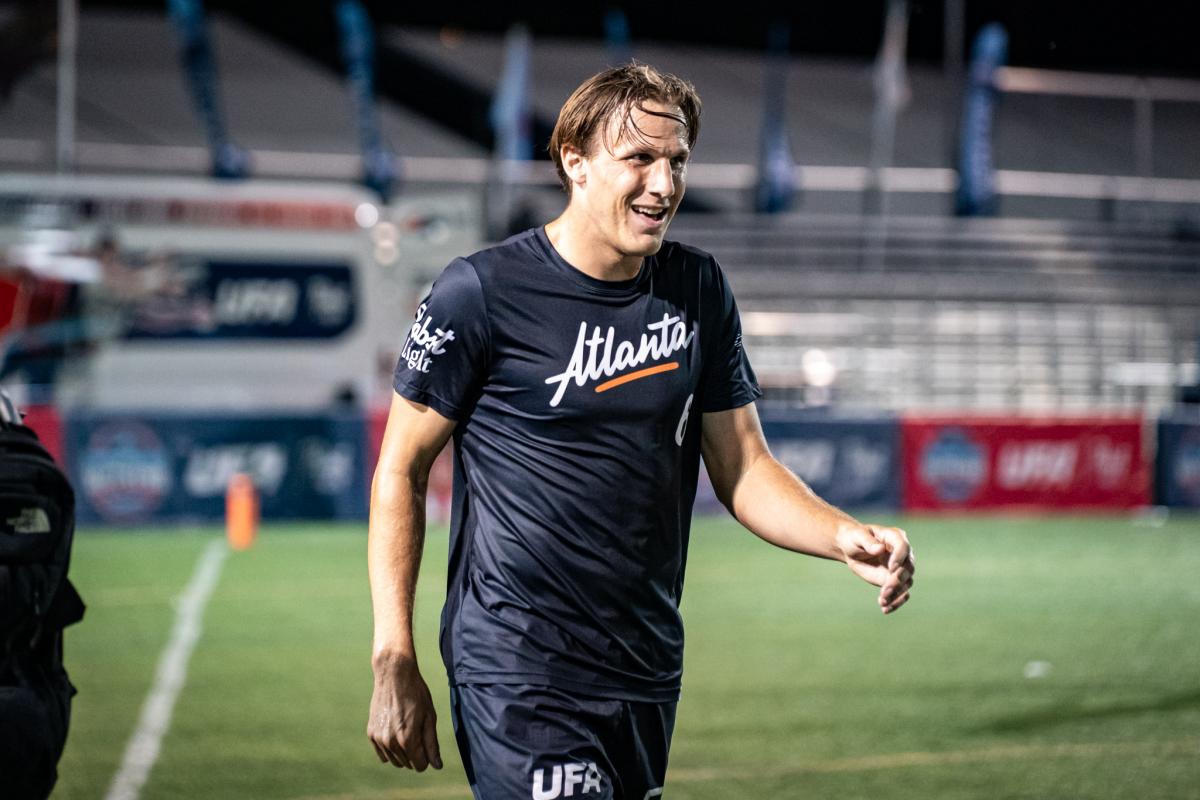
For the Atlanta Hustle, The looming question is whether or not they can overcome their inability to close out games.
Despite last year’s additions of Alec Wilson Holliday and the veteran Brock, and the breakout campaigns of Adam Miller and Hayden Austin-Knab, Atlanta’s historic Achilles' heel resurfaced in their heartbreaking semifinal loss to Minnesota.
The Hustle must find a way to break their pattern of late-game struggles in the playoffs.
They’ve been outscored 15-9 in the fourth quarter in their last three playoff losses. We’ve seen them become predictable, commit uncharacteristic unforced errors, display a lack of communication when opponents ramp up defensive pressure.
Ultimately, the burden falls on Head Coach Tuba Benson-Jaja. Unless he can successfully prepare his squad for the unique psychological weight of playoff pressure, that elusive first title will remain out of reach.
While Atlanta’s path to success is clear, Chicago and DC face a much higher degree of uncertainty.
For the Union, the loss of defensive stalwarts Payne and Wettengel leaves a significant void; they combined for 3.38 blocks per game last year. But the team's championship ceiling truly hinges on the return of Daan De Marrée. The 2025 Rookie of the Year was the engine of Chicago’s success; his absence in 2026 would be devastating for the Union. As one of the most individually dominant forces the UFA has ever seen, De Marrée is the difference between Chicago being a playoff hopeful and a true title favorite.
As for DC, they could be entering a total identity crisis in 2026.
For the first time since 2015, the DC Breeze could potentially be without Rowan McDonnell and Jonny Malks. With Head Coach Lauren Boyle also stepping down after the 2025 season, DC’s identity is more uncertain than ever.
One big question for the next coach will be whether they can overhaul the team's deep game. In 2025, DC completed just 58.18 percent of their league-low 64 hucks. Interestingly, the Breeze lost every single game last year when they completed 50 percent or fewer of their deep throws.
4. In a year of unprecedented turnover, which coaching changes will redefine the league?
The 2026 season marks a massive shift in leadership across the UFA, with 11 teams—exactly half the league—starting the year with a new head coach.
The biggest culture shift of the offseason belongs to the Indianapolis AlleyCats and their new Head Coach and GM, Nathan Bussberg. Despite having no prior UFA coaching experience, Bussberg was signed to a four-year agreement—the first major sign that the AlleyCats are going all in on their future. As a CEO and leadership coach, he brings a transformative, system-oriented approach to a team that is clearly looking to dismantle the Central Division hierarchy as quickly as possible.
It may not be immediate, and that's okay. Beyond their key signings, the 'Cats have built a long-term foundation by adding high-upside youth like Isaiah Mason and the Hawkins brothers (Carter, Spencer, and Elliot). Redefining a franchise takes time, but Indianapolis is now positioned to succeed both today and for years to come.
Another team redefining themselves, the Austin Sol, surprisingly parted ways with Steven Naji this offseason. His replacements, Casey Hogg and Joe Iannacone, inherit a talent-heavy roster. While the return of breakout stars Jackson Potts and Mark Henke is vital (I’ll be watching Henke closely after he finished fifth in the league in plus/minus per game), the headline is the return of Evan Swiatek. Swiatek led Austin in total scores for three straight seasons before missing 2025. Can this new coaching duo translate all of that high-end talent into wins against the league's best?
5. Will last year’s disappointments bounce back?
While several powerhouse programs struggled in 2025, the Carolina Flyers’ decline was the most significant. Their historic playoff streak ended despite a masterclass season from Allan Laviolette; however, his massive production was largely a result of necessity, as he shouldered a disproportionate offensive load following key departures.
If Laviolette returns this season, he’ll get much-needed help from Tobias Brooks, who is coming off a breakout year in Colorado where he averaged 657 yards and 2.5 hucks per game—the Flyers have regained their offensive balance. With Brooks back in the fold, Carolina will regain some offensive balance and be in a much better position to make the playoffs.
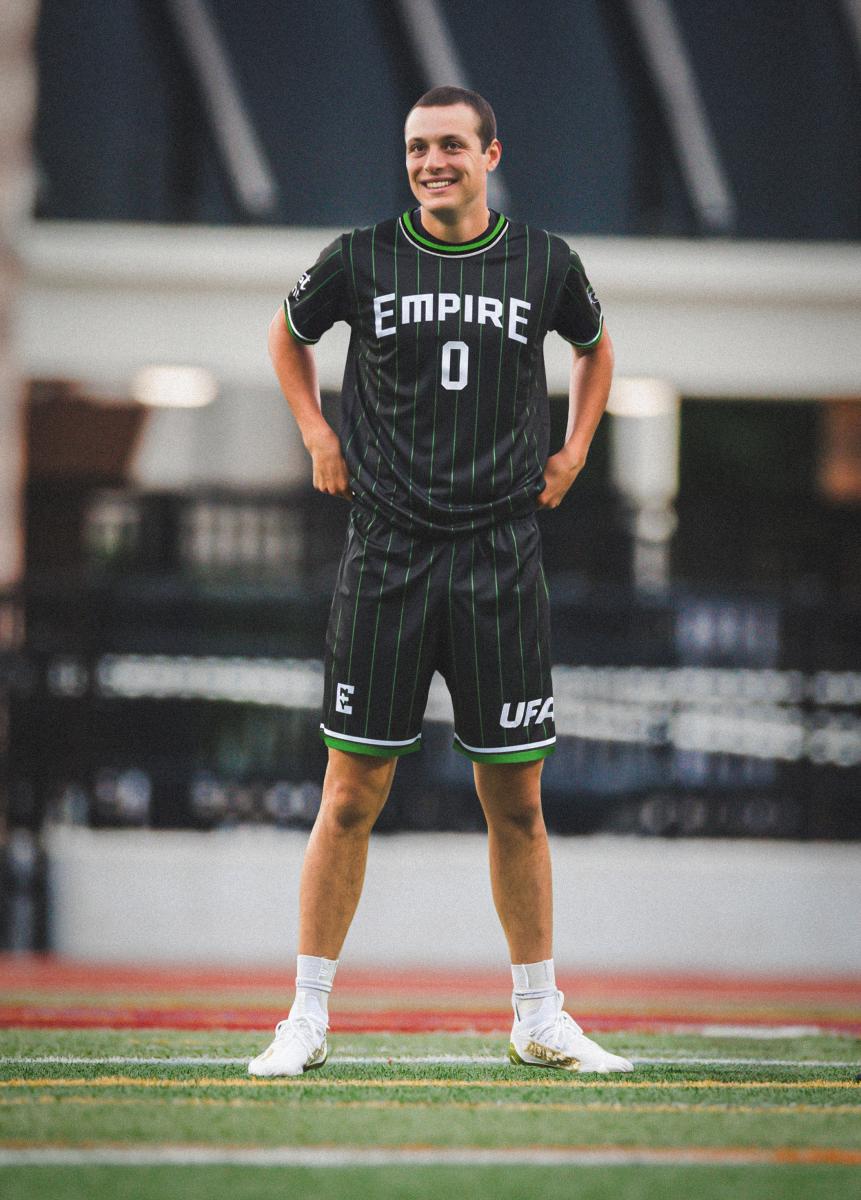
Despite making the playoffs, New York’s mediocre 7-6 record and ugly first round exit fell far below the standard expected of a Jack Williams, Ben Jagt, and John Randolph-led roster. Even with the additions of Calvin Brown, Everest Shapiro, and Max Sheppard, it felt like the Empire regressed from 2024. This decline was confirmed across the board statistically, as New York saw worse completion and break percentages alongside an increase in turnovers and goals allowed.
Given this wide range of struggles, how will key signing Alex Atkins be utilized? As a versatile hybrid capable of dominating as a QB1 or a D-line disruptor, Atkins is looking for a bounce-back of his own after an injury cut his 2025 season to just four games. If he can stay healthy, his do-it-all playmaking could be exactly what spearheads the Empire’s return to relevance.