September 8, 2026
By Charlie Hoppes
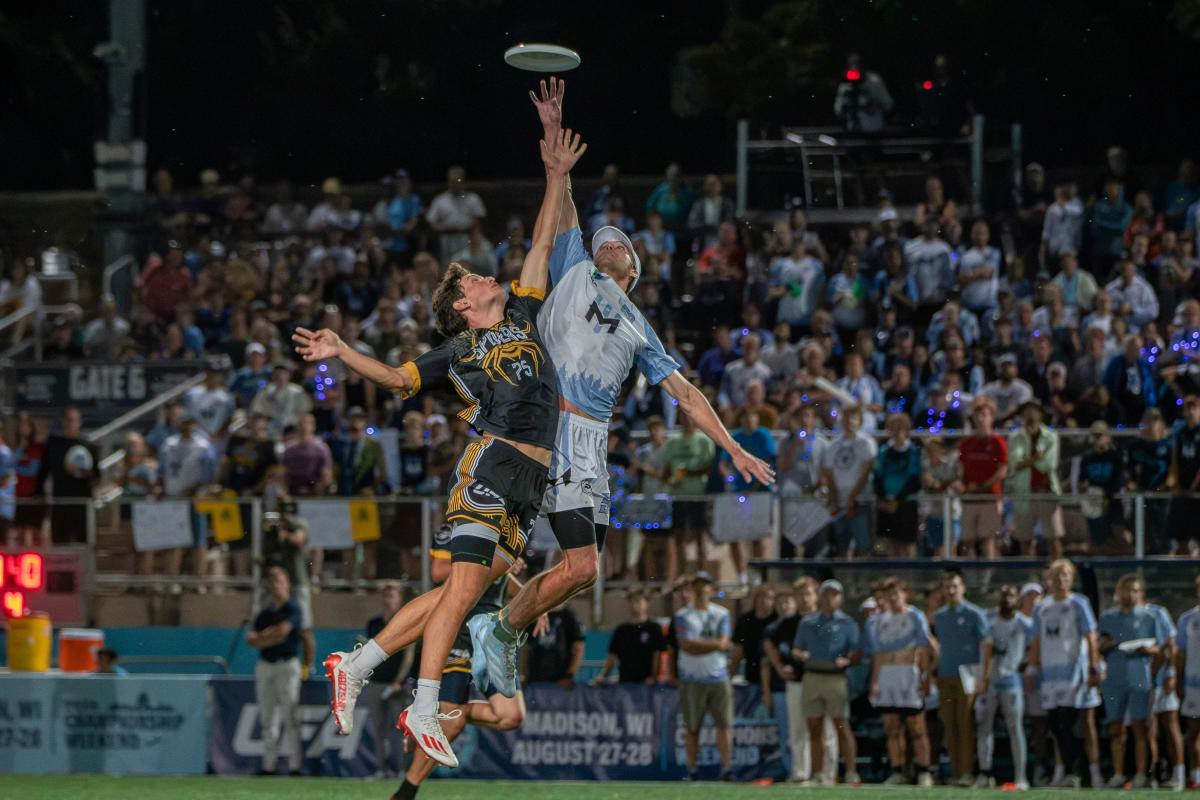
This year marked my own personal return to Championship Weekend for the first time since 2023. While nobody gave me a free shirt this time around, the view from the Gameday Live set on the sideline of the southwest end zone at Breese Stevens Field showed the league’s continued growth, both in the Championship Weekend event, and with the play on the field from the four teams who made it to Madison.
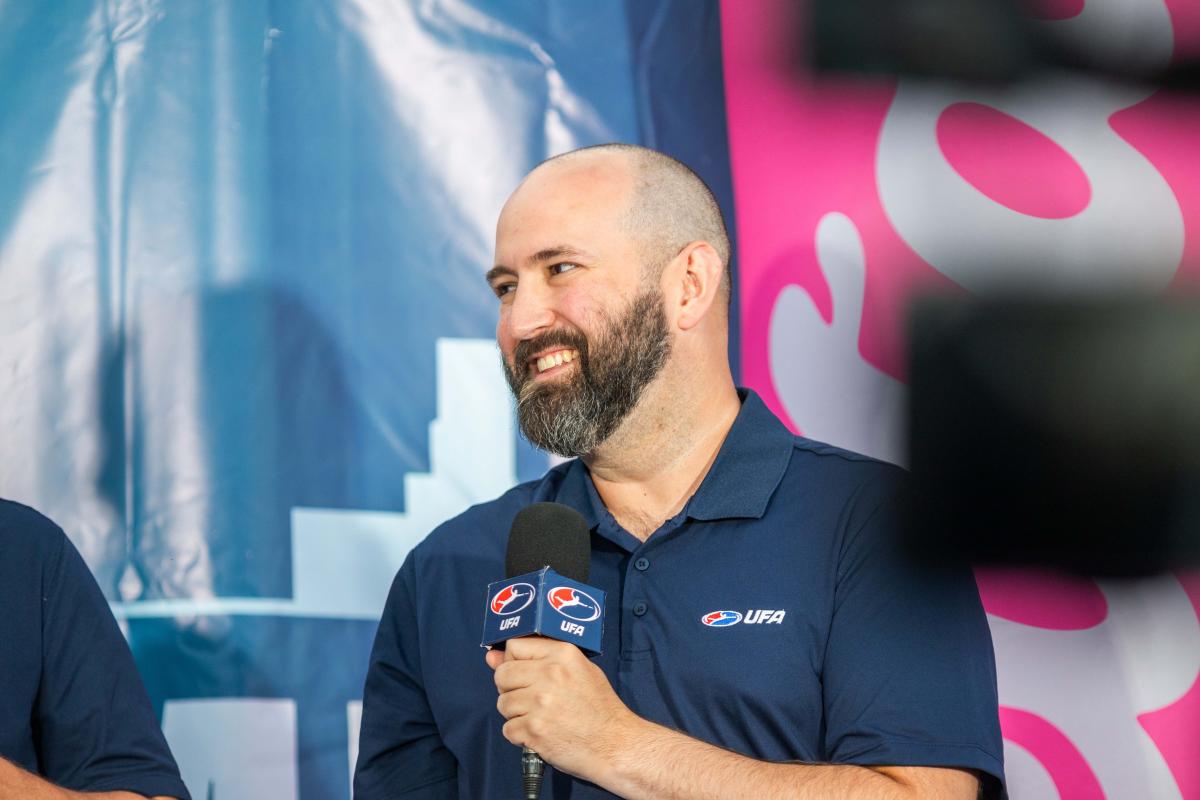
Rather than a deep dive, I wanted to share my thoughts on the games, teams, and event from that corner in a bite-sized list. Here’s how Championship Weekend looked from that sideline perspective.
Austin Sol
-
The Sol looked very confident, and moment to moment couldn’t have been less rattled throughout the game. Even in the fourth quarter as the Wind Chill lead grew, it was clear that Austin was going to exude belief in each other through the end. Whenever a good thing happened for them down the stretch, they celebrated as though it were a huge moment (because what if it had turned out to be a huge moment?), while if Minnesota made a big play, the Sol players kept their chins up and chests out, seemingly locked in to the final whistle. This time, they weren’t just happy to be there, and that came shining through.
-
The biggest concern entering the semifinal for the Sol were the details around the edges of the game–navigating double-teams, fielding pulls, end-of-quarter situations. And they did a great job on a few of those. No double-teams, on roller pulls or otherwise, seemed to shake Austin after an iffy performance against them in the South Division Championship against Carolina. And there was a clear gameplan for fielding the best pulls in the league, off the arm of Minnesota’s Cameron Lacy. They only got into real trouble twice–once on the second-to-last O point of the first half, when Kyle Henke’s centering pass to Duncan Fitzgerald was almost blocked by Kyle Suelflow, who was so surprised to find himself so close to the disc he ran into Fitzgerald for a foul. After both teams held to make the score 13-12 Wind Chill with six seconds left in the half, Henke’s pass once again led Fitzgerald downfield. This time Suelflow was ready for it, took the angle to avoid contact, and got the block, leading to a quick break and a 14-12 halftime lead for Minnesota.
-
The Suelflow block was the most shocking of Minnesota’s end-of-quarter dominance over the Sol, but far from the only crushing moment for Austin as the clock ticked down. The Wind Chill scored with one second left in the first quarter, which is never a great feeling for the defense. At the end of the second quarter, Minnesota scored with six and then also again with one second left, an absolutely backbreaking sequence for the Sol. And if that wasn’t enough, the Wind Chill scored with 11 seconds left in the third, which, when coupled with a break to open the fourth quarter, effectively ended a clear path for a Sol upset. Those four goals ended up being the difference in a 28-24 defeat. You’d have to think situational ultimate will be a focus of the 2027 Sol coaching staff.
-
Speaking of the first-year coaching staff of Casey Hogg, Joe Iannacone, Jason Holleran, and Kevin Hwang, I thought that group had an excellent playoff run. There’s a case to be made that this group put together one of the best inaugural seasons ever, even if they were overshadowed by the title in Oakland. In addition to building on the existing tactics that has made Austin such a dynamic team with the disc, they did an expert job of putting players into positions to succeed all season long, getting far more than the sum of their parts. The most notable change was a mid-game swap in the South Division final, with Myles Armstrong bouncing over to defense and Matthew Armour coming to the O-line. Armstrong played well after his move to defense, with two goals, two assists, and only one turn across the game and a half he was on the line. And Armour immediately made the offense feel more stable, constantly churning for underneath gains, both to jumpstart the offense and to act as a safety valve, with his six goals in those two playoff games nearly equaling his regular season output (7).
-
It sure seems like the start of something for Austin, not a flash in the pan or the end of an era. This team was the best Sol team we’ve ever seen. If they are able, their off-season priority number one should be adding another O-line handler to work with Fitzgerald. Kyle Henke is a likely future Hall of Famer in his prime, and while he had a very strong season in the handler space, getting him back downfield will allow him to be the dual threat that’s made him one of the top players in the league.
New York Empire
-
I can’t pretend to be unbiased here. I was sad to see my old team go out in the first round, especially when they seemed poised for a return to a trophy coming into the weekend. But after missing out on the dance for the past two seasons, seeing the green and black back at Championship Weekend felt a bit like an announcement of a new era of the Empire. New York entered the semi-finals with one of the best offenses in history, a big, powerful defense that seemed to walk in breaks at will, and more greats of the sport on the roster than I can take the space to mention by name. While it was a surprise to see the Empire go down to Oakland, the 2027 Empire should represent a reload, not a rebuild. I expect them to be near the top of the league in all the same categories this time next year
-
Bryan Jones said it well on the broadcast: in some ways, it felt like the New York roster was built to beat the size and chunk yardage style of the (then) defending champion Boston Glory, and that’s just what the team did in the East Division Championship. But the roster does have more flexibility than the Empire coaching staff used, and with good reason; again, this was a historically great offense and an elite defense. To go away from the key things that made them excellent (including Alex Atkins, Jack Williams, and Daan De Marrée pushing the disc downfield to a hyper-efficient Ben Jagt, with John Randolph, Marques Brownlee, Sam Jonas and Nicholas Whitlock converting breaks with ease) too early would have felt unreasonable, and only with the benefit of hindsight can we say that Oakland’s speed on both sides of the disc was overwhelming to a team built on power. It will be interesting to see what the front office and coaching staff’s response will be, both in terms of what the Empire off-season roster changes look like, and if personnel will be juggled, both going into next season, as well as throughout next summer’s schedule.
-
There are a number of great performances from Empire players this season to celebrate, from veterans and rookies alike. Alex Atkins is an MVP candidate, with perhaps the greatest power throwing plus efficiency season the league has seen since Ryan Osgar’s 2022, with a 96.9 percent completion percentage, including a blistering 82.6 percent on 46 huck attempts. De Marrée only played in 11 games, but will still collect some All-UFA votes for his stellar play. Jagt was better than vintage in his efficiency, with only four throwaways all season to go against his 29 assists, 48 goals, and the most throwing yards he’s had in a season since 2022. John Randolph and rookie Nicholas Whitlock both narrowly missed collecting 20-20-20 in assists, goals, and blocks, and led a defense that seemed like it would never give the disc back when they took it away.
-
No team ownership and management is as committed to winning as those of the New York Empire. Could this loss spur a leveling-up of an already great team, the way the loss in the 2021 final led to undefeated, dominant championship runs in 2022 and 2023?
Minnesota Wind Chill
-
Another Championship Weekend, another appearance in the finals for the Wind Chill. This one felt different though, in some ways. While the teams in 2024 and 2025 played for a title too, they felt like they scraped and clawed to get there. The win over Austin was nothing short of clinical, the kind of game-controlling performance we had yet to see from the Chill in this arena. Nothing short of terrifying for future opponents to see the feisty underdog that had yet to be favored in any previous Championship Weekend game over the last three years step into and own their new, well-earned role of favorite so comfortably. The league’s model franchise took another huge step forward this weekend. The plucky upstart is dead and gone. The Wind Chill are, at last, a bona fide powerhouse.
-
There might not have been a single more impressive upgrade from 2025 to this year than the Wind Chill O-line. The additions of Noah Coolman, Lukas Ambrose, and Nate De Morgan, coupled with the swap of Gordon Larson to the backfield and Will Brandt to the initiator layer, set the tone. Nearly every starter on the O-line had career years, with second-year surprise Zach Morton emerging as a bonafide receiving star. This unit had been an active weakness of a title contender for years, and this year it all clicked into place, skipping “acceptable for a playoff team” and going straight to “reliably excellent.”
-
To say more about that Larson-Brandt switch: Larson went from 401 completions in 2025 to 630 this season, had a career-high in throwing yards by nearly 1,500 yards, and was truly a pure reset all season; he averaged 0.21 yards per reception, a stunning statistic for the former downfield goal-scorer. His emergence in the backfield allowed Brandt to capitalize on his immense talent downfield for the former Championship Weekend MVP’s first elite full season. He nearly swapped his throwing and receiving yards exactly from 2025, still managed the same number of completions in the regular season, a comparable assist total to previous years, but a career-high in goals (28) that was more than double his next best (14, from 2021). Still only 24 years old, Brandt’s ability to use his 6’4” frame to attack deep with his legs opened up throwing lanes for his teammates, and led to opponents backing one of the Wind Chill’s best throwers to keep from getting beat deep. Here’s hoping for a speedy and complete recovery for Brandt, who suffered an injury against the Sol that kept him out of the finals.
-
Head Coach Ben Feldman continues to be one of the best in the league, and that was on full display this weekend. In their semi-final win over Austin, the Wind Chill executed their Plan A on both offense and defense the whole game, and even with how well the Sol played and even considering how long the game stayed close, they never quite were able to truly threaten Minnesota. They dominated the details, from end-of-quarters to having their pullers intentionally pull out of bounds to run the clock a little more in the fourth quarter, trading field position for time.
-
Unfortunately, even Feldman couldn’t pull a rabbit out of the hat with his offensive lineup. After the loss of Brandt in the semis, De Morgan suffered an injury during warmups before the championship game, compounding Minnesota’s injury woes on the O-line. Brandt and De Morgan had been Minnesota’s most dynamic downfield throwers all season. Losing both in the span of roughly 22 hours—especially with De Morgan’s injury coming just minutes before opening pull—put enormous strain on the roster. It also forced the coaching staff to try to build a brand-new airplane while flying it against an Oakland defense that had crushed New York’s record-setting offense the day before. Midway through the second quarter, Minnesota trailed only 8-7. Oakland held and broke, and while the pasted-together Wind Chill offense was only broken once in the second half, their legendary defense was stretched thin as key players crossed over to play offense, and did not break the entire second half. While it wasn’t enough to stay in the game late, Feldman and company’s improvisation and the team’s ability to roll with the punches was once again a leading story for a team that will unquestionably be stronger in 2027.
Oakland Spiders
-
The Oakland Spiders were dazzling for eight straight quarters and looked every bit the champions they now are in the UFA. Let’s try to encapsulate the performance.
-
This was the best offensive performance in Championship Weekend history by a few different metrics, as Evan Lepler outlined in his post-championship Tuesday Toss. From field level, the Spiders depth of speed was striking, as much to fans as it was to their opponents. With perhaps the calmest conditions Breese Stevens Field has ever seen, the Empire and Wind Chill had no help from the elements to slow down the track meet that was the Oakland offense. As they have all season, Oakland would get the ball rolling downhill, turning a foot of separation one throw into a yard for the next, and countless points ended with a Spider running free in the end zone, the defense far too over-leveraged to protect all the dangerous spaces they needed to watch. It felt like watching the evolutionary extension of the excellent DC Breeze teams of the early 2020s, but somehow that much faster and more dynamic
-
One player I wanted to highlight Dexter Clyburn. The 2025 Callahan winner is perhaps the most overqualified pull-fielder in the league, but played his role with exacting perfection all weekend long. Against New York, Clyburn was regularly flushed downfield, where he lit up the Empire for a season-high 199 receiving yards and four goals, including a huge layout to add to the highlight reel that will be played in Oakland for years to come. He has the ability to take over games both downfield and in the backfield, and certainly has done so all season long as opponents try to triage the damage coming from too many places on the Spiders offense at once. Against Minnesota, he was even more impressive. While the numbers were a bit down from his semi-final showing, Clyburn fielded the towering, blading pulls of Lacy all night long, catching most of them, worked his way out of the rare stagnant positions the Wind Chill forced Oakland into and got the offense re-ignited, and went a perfect 36 for 36 on his passes, four of which went for assists. It’s impossible to call the rising star with a great season an under-the-radar player, but Clyburn both shone and did the dirty work, and was one of the players who jumped out to me while watching in person.
-
The two-headed D-line monster of Evan Magsig and Jason Vallee finished first and second in the UFA for assists thrown by defensive starters, and only stepped up in the playoffs. Magsig, a former O-line star, moved to defense this year and put up stats that nearly reached the numbers he put up in the past, with far less offensive volume. He was banged up in the finals, and could only play 14 points, but was a steady driver of the counterattack until that point. And once he went down, Vallee kept going. A longtime elite, lockdown defender, and one of only two Spiders with previous Championship Weekend experience, Vallee piled up career-bests in assists, completion percentage, and throwing yards. Back in June, he went 39 for 39 for 365 total yards and five assists against the Wind Chill. In the finals, he was once again a thorn in Minnesota’s side, going 32 for 33 for 263 total yards, two assists, and kept break attempts alive all night.
-
Not enough can be said in praise of first-year Spiders Head Coach Liam Kreiss, though Evan Lepler’s Seven On The Line does a good job. The 28-year-old only avoided being direct peers with his players by coaching an extremely young Spiders team, and more stunningly, had only coached one season of ultimate at any level prior to leading Oakland to a UFA championship, with California-Berkeley. Despite this, Kreiss was masterful in both games in Madison, with well-thought-out game plans, perfectly timed timeouts, and bold lineup changes, including inserting and keeping 19-year-old Stefan McCall, who had only played in four games in his UFA career prior to the playoffs, on the O-line, and shifting key O-line contributor Adam Rees to defense. McCall led the team in scores and nearly doubled his regular season statistical output, and Rees asked for and received the De Marrée matchup and forced the consensus best player in the world to get the disc in disadvantageous positions all game. And while Kreiss deflected credit to his captains and assistant coach Joey Ricks and touted a collaborative leadership style, it could have been easy for the Oakland leadership to spoil the broth with too many cooks in the kitchen. Kreiss and company made sure there was never a time every cook was chopping carrots at the same time, and the efficient kitchen served up one of the great Championship Weekend performances ever, and the Spiders’ third title.
Championship Weekend
-
There is a strong case to be made that these were the best ever teams that Minnesota and Austin have ever had, and a reasonable one to say that this Oakland team was better than the Beau Kittredge and Ashlin Joye-led back-to-back champs of 2014 and 2015. A great performance by the Empire would have pushed them into the crowded conversation of best New York team ever. And despite that, for Oakland, Austin, and Minnesota, this season felt like each team was only just now stepping into their full potential. All three seem poised not just to return next year, but to build on this year’s success. And as I said earlier, we can expect the Empire to be as motivated as ever to get back to the mountaintop. What a special four teams!
-
It was a joy to talk ultimate with Ian Toner and Colin Camp on the Gameday Live set both days, and fun to pick the brains of Evan Lepler, Charlie Eisenhood, and my fellow former Empire Head Coach Bryan Jones. If the teams were great, it was a blast to listen to those five guys talk shop, and I hope viewers felt the same way.
-
We expected Minnesota fans to make the four-hour drive and show up en masse for both games, and they certainly did. But the other three fan bases traveled well too. The final featured a battle in the bleachers as well as on the field, and both Spiders and Wind Chill fans traded rehearsed chants and cheers. The energy was crackling for two straight days.
-
To me, this remains one of the best ultimate experiences out there. Breese Stevens Stadium played host to a great event in addition to the two semi-finals, the Western Ultimate League-Premier Ultimate League All-Star Game between the two leagues that feature women and nonbinary players, and the championship game. Starting with press conferences in the morning, the stadium hosted a seemingly endless stream of activities and events, from youth clinics to VIP experiences. The vibes could not have been higher, and it was a wonderful experience, as it always is. I cannot recommend watching a Championship Weekend in person, even if your team has long-since been eliminated. It really does feel like a celebration of ultimate frisbee, and I have already found myself counting the days until Championship Weekend 2027. I can’t wait to see you there.