



Ryan Baker
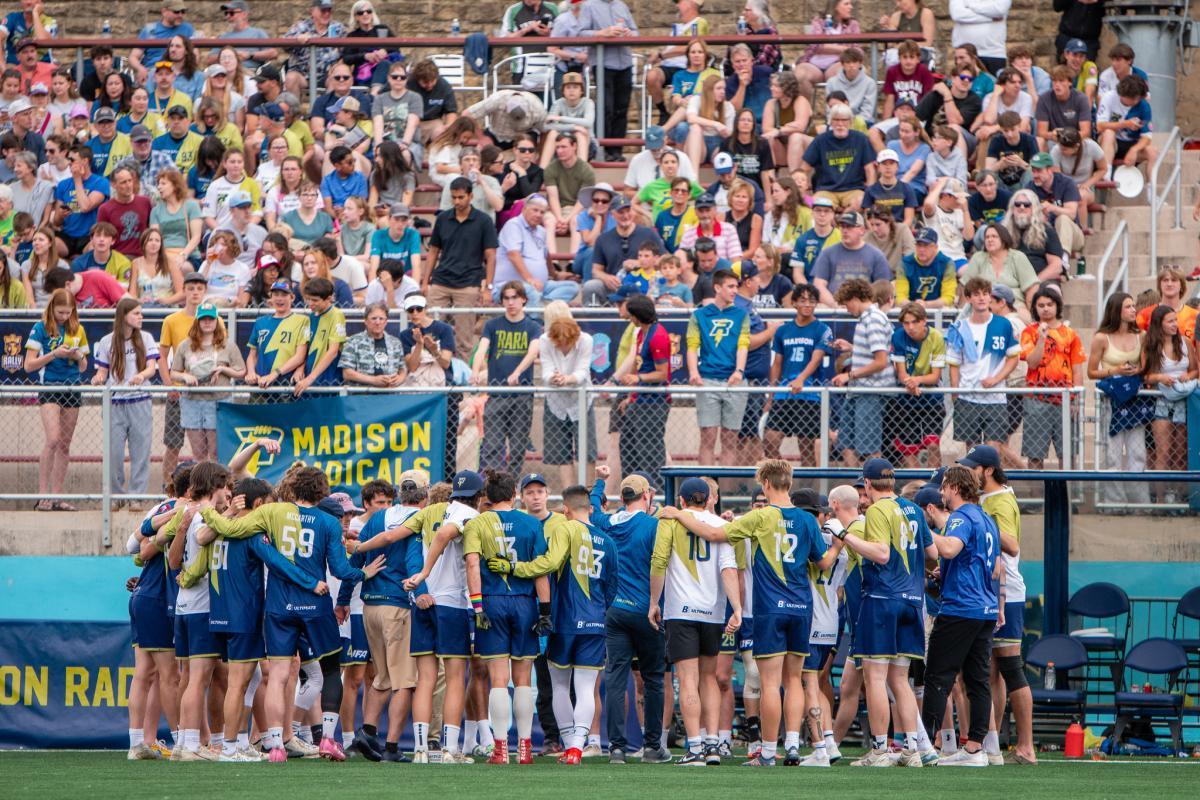
After four straight seasons of missing the playoffs, the Madison Radicals returned to the bracket for the third straight season in 2026. They finished the regular season at 7-5, earning second place in the Central Division.
Ultimately, the season ended at the hands of the Indianapolis AlleyCats in Madison’s first playoff home loss in franchise history.
“We had the toughest schedule we've ever had, and we wound up hosting a playoff game,” said Head Coach Jacob Spiro. “That's pretty good. We achieved a lot of what we wanted to achieve, but obviously that game didn't finish the way that we would like to.”
Madison, a tough-nosed, rugged, defensive-minded team, flipped the script this year. Offenses were more efficient across the league, leading to a decline in defensive success, and the Radicals followed suit. They debuted the year with a new offensive look, trying to keep up with what other top teams in the league are running.
Path to the Playoffs
The season started on a high note for Madison. They took their new dominator offense into Indianapolis and fought tooth and nail to come away with a one-point win. Eric Sjostrom fed Anthony Gutowsky his fifth goal of the night with 10 seconds left, opening the season on the right side of the win column.
The team continued its road success, going to Pittsburgh and taking down the Thunderbirds by four behind another five-goal performance from Gutowsky. With their first home matchup of the year looming against the Minnesota Wind Chill, the Radicals were confident heading into the game.
As stated earlier, 2026 was a season for the Central Division with little wind. The Minnesota matchup was the first example. In the cleanest game ever showcased in the historic Border Battle, Madison suffered their first loss of the season by three. However, it was Pieran Robert’s breakout party, catching eight goals in the game.
This is when opponents started to have more film on the handler-heavy offense led by Nico Ranabhat, Ian McCosky, Gabe Vordick, and Sjostrom.
“I think we made some real progress on offense compared to previous years, and started cooking up something that could be genuinely new, interesting, and effective,” said Ranahbat. “The dominator set was a huge part of that for me. There was something really satisfying about being in the middle of that machine and feeling like each piece was influencing the next. I honestly had more fun playing on the Rads this year than I have in any other year of ultimate.”
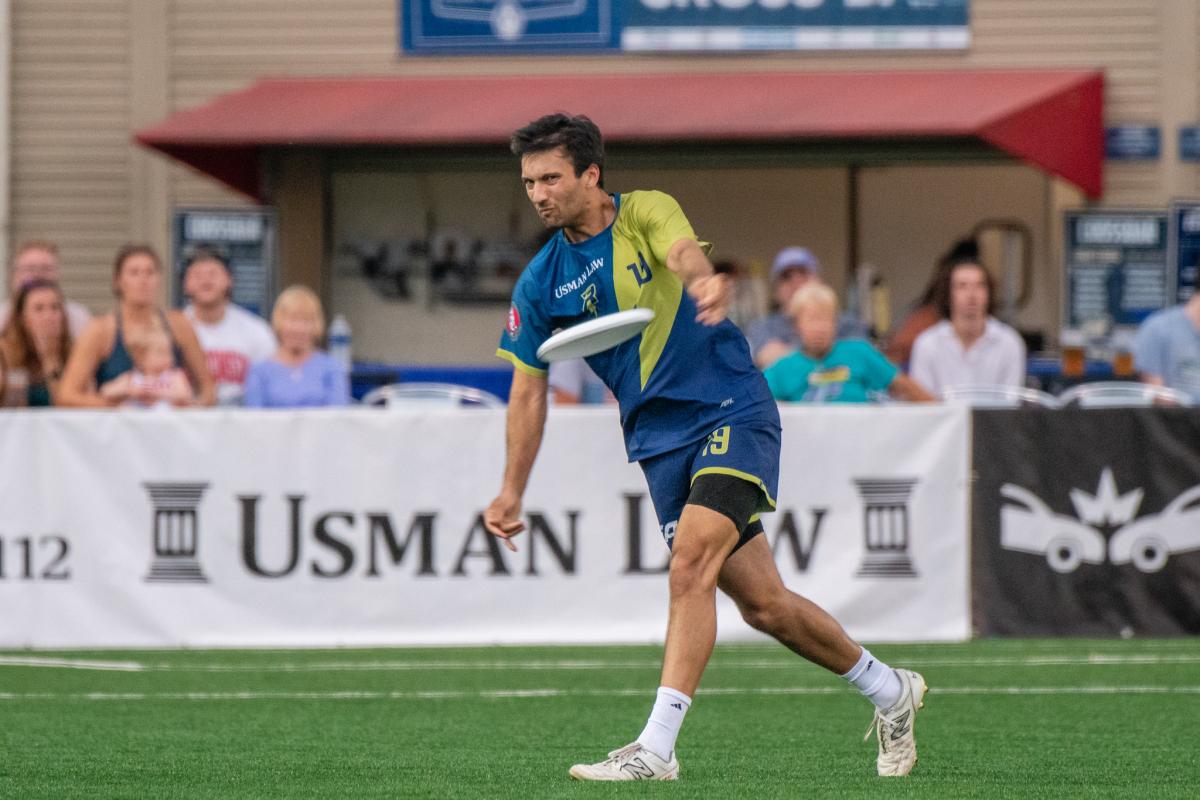
Madison walked into a heavy rainstorm for their next game, against the Union in Chicago. After an abysmal start, the team went down 2-9 in the first 16 minutes. Although the Radicals won the remaining quarters, the deficit was too much to overcome.
This is where a big lineup change happened. After starting off the season red-hot with 10 goals in two games, Gutowsky was moved to the D-line. Amid possession issues, a reduced role in the new offensive set, and D-line injuries, the team decided Gutowsky’s talents would pay off more on defense.
Hoping to break the two-game skid, the Radicals hosted Indy and won in another nail-biter. Attempting to build on that momentum, the Salt Lake Shred came to town for the first matchup between the two in UFA history and on the first-ever Thursday night UFA game. However, Madison suffered their third loss of the season by four points to the West Coast squad.
Madison got over .500 after getting some revenge on the Union in a low-scoring affair and followed it up with their third win over the AlleyCats a week later.
At this point, the Radicals controlled their own destiny and were 5-3. That is when Indy dismantled the Radicals by 13, one of their worst losses in franchise history. Madison shook that loss off when they hosted Pittsburgh and beat them by 12, clinching a .500 record or better.
“Our offense was by far the most efficient it's been,” said Spiro. “I don't think that it was flexible enough. We weren't good enough at counterpunching to get us through the end of the season.”
They sealed the deal the following week against the Union, with a seven-point win, securing themselves a home playoff game before their final game of 2026. Another Minnesota matchup stood in the way, and another loss to their rival gave the Radicals a 7-5 regular-season finish.
For the fifth time in 2026, Madison would take on Indy. Up to this point, Madison had three close wins and one brutal loss against them. In another next-to-no-wind bout, Madison couldn’t overcome some self-inflicted wounds. The game ended 15-17, and the Radicals' season was over.
“The heat just got a few of us in a blender, myself especially, which affected our play,” said McCosky. “Props to Indy for handling that better than us.”
Compared to past seasons
Looking at team stats, the Radicals were very average this year in nearly every category. They were 14th in scores per game, had the eighth-fewest scores against per game, and were nearly right in the middle for hold percentage, O-line conversion rate, break percentage, and red zone conversion rate.
The team excelled in D-line conversion rate, finishing 9th, and completion percentage, finishing 8th. Granted, completion percentage was ramped up because the Radicals averaged 260 completions per game with the second-fewest huck attempts per game.
Since a lot of this team looks similar to the last few years, it feels fair to compare it to past years' teams. This is actually the lowest mark of scores per game for Madison since 2023, but they also didn’t have Detroit to face to bolster those numbers this season.
The overall scores may have been down, but the group's overall efficiency was through the roof compared to years past. Their completion percentage spiked up over two percent from 2025 and was the highest mark in franchise history.
Their hold percentage was also the best the team has seen since 2022. In addition, their O-line conversion rate jumped up three percent from last year and was the highest since 2023. Finally, their turnovers per game were astonishing compared to previous teams. They had 15.92 turnovers per game in 2026, four down from 2025, and by far the lowest mark in franchise history. Madison has never seen a season with fewer than 17 turnovers per game until this season.
“The future looks bright for the young Radicals,” said Alexander. “I’m not sure where the biggest strides have been, but the overall throwing talent on the team has improved. Seeing the young O-line guys find and step up into new roles has made a big difference.”
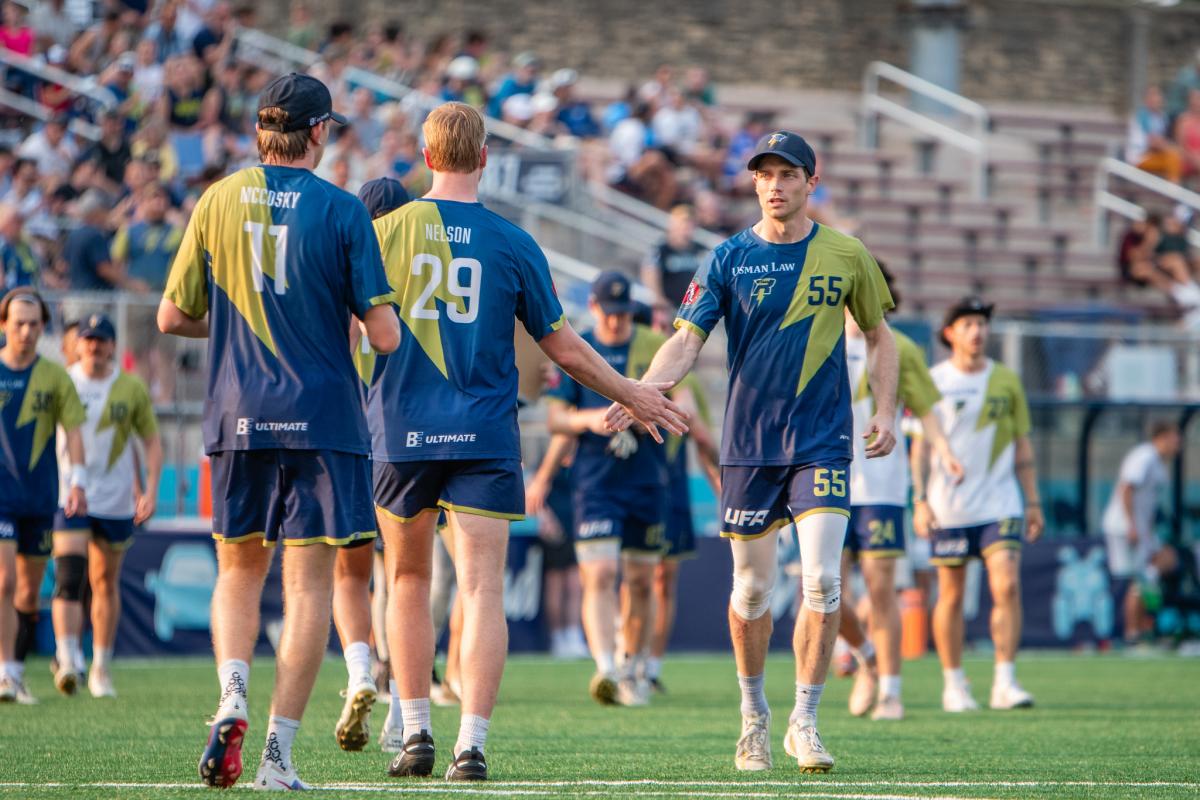
While the numbers spiked on offense, the numbers on defense dropped sharply. Granted, there were a lot of no-wind games, but they were also dealing with injuries all season long. Their perennial defensive cornerstone, Luke Marks, played in just five games, and Sterling Knoche played in just seven games. Joshua Wilson suited up for only two games this year, Mac Weber played in just five, and Kainoa Chun-Moy played in seven.
“We could’ve played with a bit more intensity and intentionality,” said Robert. “It seemed that in our losses, we lost a bit of heart throughout the games. With such a great fan base behind us, it’s a shame that we couldn’t up the intensity and fight through every whistle and hardship we faced.”
Their 28.10 break percentage rate was an eight percent dip from 2025 and the lowest since 2022. Even their D-line conversion rate decreased by four percent. The biggest concern was how many blocks they failed to produce. Yes, offenses are getting significantly better, and producing blocks was a struggle across the league, but it’s concerning given the narrative around this defense for so long.
“We need better organization, clearer expectations, stronger team building, and a more intentional approach to how we spend our time together,” said Ranabhat. “Individual players have to sharpen their own tools, but the team has to figure out how to turn all of those sharper tools into something cohesive. I think we have a pretty exciting foundation right now, and if we can combine the individual work with the right team structure, there’s a lot more for us to unlock.”
This year they averaged just 9.23 blocks per game. In 2025, they averaged 12.54. In 2024, they averaged 13.21. They’ve only dipped below 10 in two separate years, but this was the lowest in franchise history.
Another Radical atop the leaderboard
The team had its ups and downs, and so did the players themselves. Last season, Gutowsky led the league in goals, but this year, Robert took that mantle. Robert finished with 50 goals, leading the league, and earning himself Third Team All-UFA honors. Robert also finished leading the team in blocks with 18.
“I definitely did not anticipate this level of production this season,” said Robert. “The Radicals offense walked into the season confident but with a big question mark in terms of how our new system would function against different teams. I found my spot on the line and executed well, thanks to the other six on the field putting me in good positions to move the disc down the field and score. I’m extremely proud of what our offense was able to accomplish as a first-year system.”
What’s even crazier is that Robert produced all this while nearly splitting his time evenly across both sides of the disc. He finished with 179 offensive points played and 156 defensive points played. When the team needed a spark, Robert answered.
“I knew that he had the capacity to do it,” Spiro said about Robert’s season. “I don't know that I was expecting it to that degree. We were conflicted about which line to put him on, so we decided to play him across both. He has a level of fitness that he was able to pull that off.”
Other players who saw career years were Ranabhat, McCosky, and Sjostrom, all part of that dominator set. Ranabhat was the best of the bunch, leading the team in assists with 37, adding 14 goals, and had 5,370 total yards. He was also incredibly efficient in his expanded role. Last season, Ranabhat had 117 completions on a 93.6 completion percentage, while cutting. This year, he had 454 completions on a 96.8 completion percentage, while commanding the backfield.
“The transition honestly wasn’t difficult. If anything, I found handling easier than cutting,” said Nico Ranabhat. “When you’re handling, you have a much wider window into the field. You can see the shape of the offense, watch the defense shift, and make decisions with a little more information in front of you. Cutting feels more like trying to solve a puzzle while someone keeps taking pieces off the table. You’re constantly checking the space downfield, checking the backfield, and trying to figure out where you can create the next opportunity. The plays are different, too. Cutting gives you those explosive, almost cinematic moments where you’re skying someone or laying out at full speed. Handling is a little more subtle. Sometimes the best play is just a clean throw, a break, a convincing pump fake, or a tiny jab step that moves the defense half a step in the wrong direction. I really enjoyed that change in what it meant to make a play.”
McCosky totaled 24 assists with a 96.42 completion percentage, along with seven goals and 4,359 total yards. He was also tied for the team lead in hockey assists with 31. Like Ranabhat, McCosky had to adjust to his new role. Before this season, McCosky played only five games in 2025 and seven in 2024. He went from having 66 completions last season to 458 in 2026.
“Up until a few weeks before our first game, the coaches were still trying to find a way to get me back on defense,” said McCosky. “That obviously never happened, but even through the first few weeks, my role was pretty minimal. It wasn’t until we played Wind Chill that I had my first real contributing game. Looking back on the season, I would consider it a success. I’m definitely proud of myself. Even though I didn’t have my best game in the playoffs, I’ve never had a chance to play offense and be a real contributor, and I think I did well in that role.”
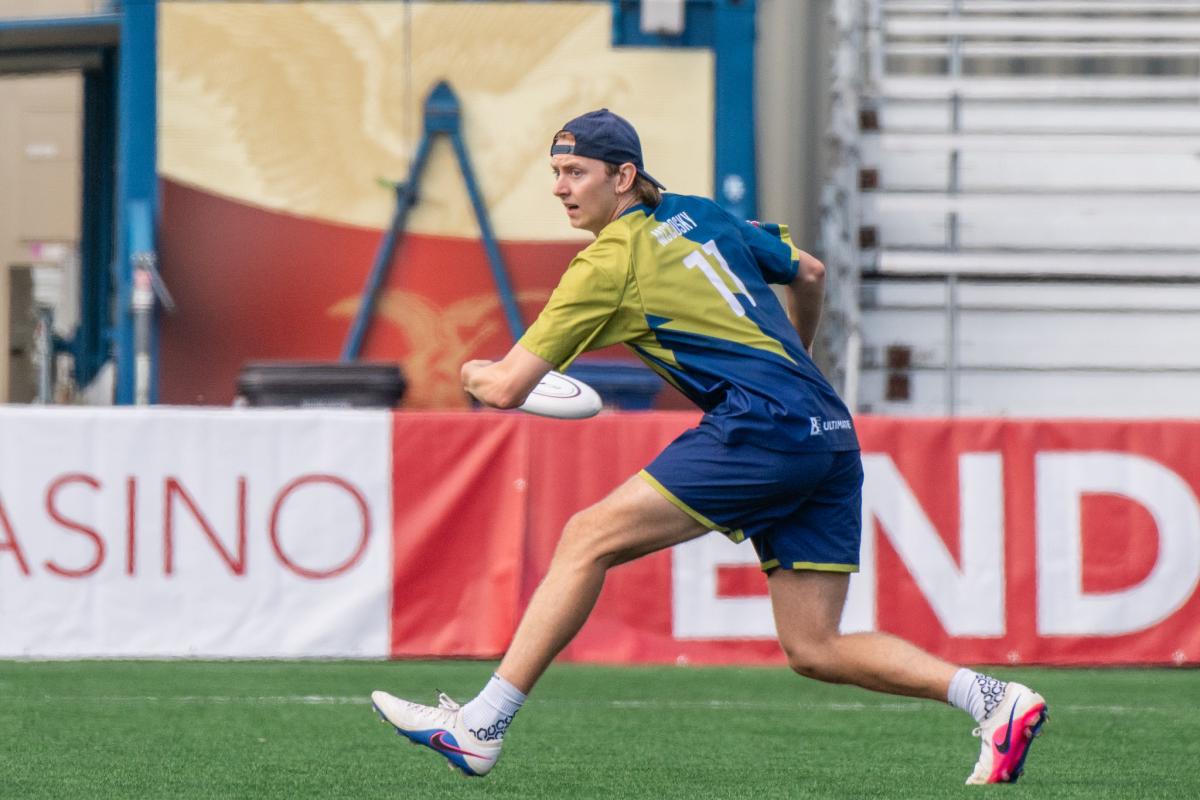
Sjostrom and Vordick rounded out that crew with 29 and 19 assists, respectively. Sjostrom was the spark when the Radicals needed a deep shot. It may have happened at a large clip, but fans were blown away by plenty of moments when he laid in the hucks. As for Vordick, he was more of the give-and-go guy. Leading the team in completions with 523, Vordick also threw for 13 goals and 4,930 total yards.
With more focus on defense and downfield production, a ton of guys can walk out and smile at their 2026 results. Max Sample caught a career-high 23 goals. Jack Nelson looked great coming off a 2025 season riddled with injuries, posting 13 assists and 21 goals. Jake Carrico managed 20 assists and 10 blocks. Sam Stark had 15 assists and showed flashes of major arm talent. Kelsen Alexander and Victor Luo played all season consistently. Alexander grabbed a career-high eight blocks and gave the transition offense a ton of confidence.
One of the biggest question marks all season was Gutowsky and his production. He went from wicked goal-scorer to a defensive presence that struggled at times. He still managed 30 goals and 14 blocks, but he had 11 turns and four drops this season.
“I wouldn’t say it was a down year,” Gutowsky said. “It was just a switch of positioning, and naturally D-line doesn’t look good on the stat sheet.”
Finally, we saw major potential from some of the guys who either weren’t expected to see the field much or are part of the younger guard in terms of UFA experience.
Kyle Conniff, in his first season as a Radical, had 10 goals and four blocks. Max Junga had three assists, three goals, and three blocks in seven games. Arthur Carne was asked to backfill the dominator set on a couple of occasions and proved to be a serviceable option. Donte Buckingham was one of the biggest shocks, ending up playing in nine games and making electric plays when the Radicals needed them.
“Kyle and Donte would probably be the main two that came out of nowhere,” Spiro said. “I thought Arthur, for being a young player, was able to grow a lot and help us a lot.”
Favorite moments
“There is no better place to play in the UFA than Breese Stevens Field,” said Robert. “The Madison community and fans have made my time on the Radicals unforgettable. I cherish every game I have played and am so thankful to have grown so much as a player and leader within this organization.”
“Guys had a great time together, so the bonds that we developed during those road games, people always had a great time doing different stuff on the bus,” said Spiro. “The moment that most of the guys picked was Max getting the block in the first game and then ripping his jersey. In general, I thought the vibe that we created as a team was what we were most proud of this year.”
“I think my favorite moment isn’t actually on the field,” said McCosky. “The drive back from Pittsburg was truly a special moment for me. Celebratory drinks, nowhere to be, and singing any song we could, while Ben was shredding on the guitar.”
“This season was a really important stepping stone for us,” said Ranabhat. “We made some meaningful improvements compared to past years, experimented with new ideas, and had a different level of buy-in across the team. We got a clearer picture of what we could become. We know we can compete at a high level. The frustrating part is knowing there’s still another gear sitting somewhere just beyond what we reached this year. That makes me excited more than anything.”
“Personally, it was one of my better seasons, so that’s always nice,” said Alexander. “As a team, seeing our offensive efficiency improve was a highlight. I like that the coaching staff is analyzing the game and staying on top of the emerging trends.”
“My favorite moment was our final regular season home game against Chicago,” said Robert. “It was great to win our season series vs. the Union, play familiar faces, and play under the lights with a wonderful home crowd. It was so wonderful celebrating after the game in the beautiful Wisconsin sunset.”

